Digital Meets Sustainable: SMART 2026 Explores the Future of Responsible Tourism and Sustainable Marketing
02 Apr 2026
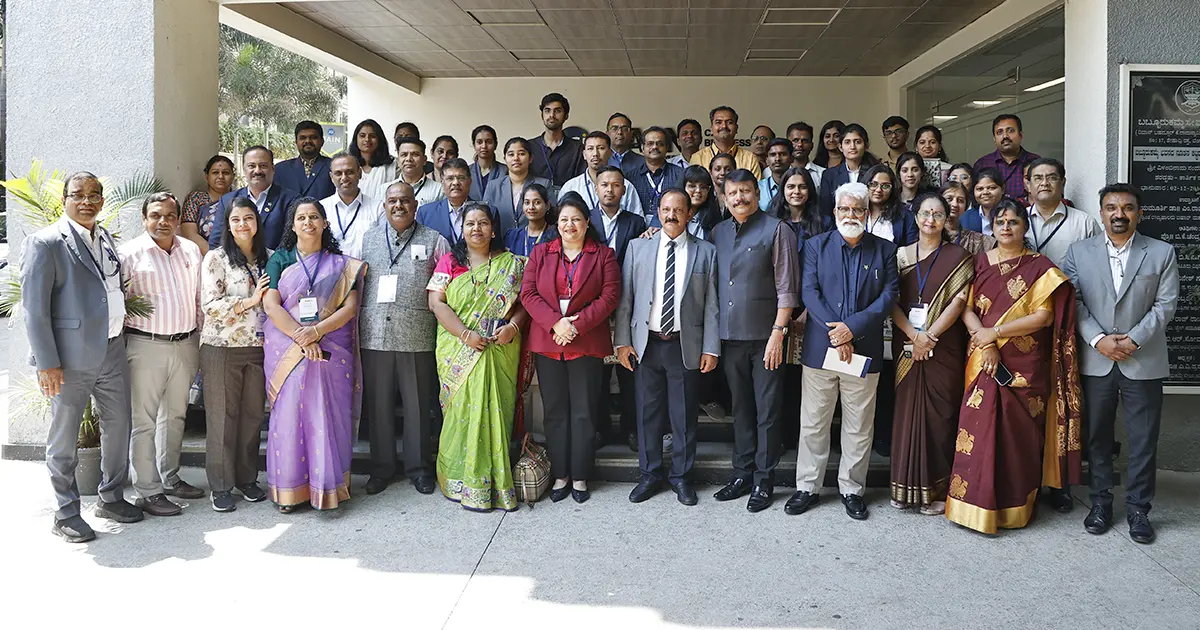
Bengaluru, 2nd April 2026: The Faculty of Management Studies at CMS Business School, JAIN (Deemed-to-be University), convened thought leaders, researchers, and students from across disciplines for the International Conference on Sustainable Marketing and Responsible Tourism in the Digital Era (SMART 2026), held on 1–2 April 2026. Organised in collaboration with Taylor & Francis Group, the conference created a dynamic platform to explore how digital transformation can align with sustainability goals in marketing and tourism.
The event opened with a welcome by Dr. Hemanth Kumar S, who set the tone by highlighting the transformative role of artificial intelligence and digital platforms in shaping environmentally conscious consumer behaviour. This perspective was expanded by Dr. Jitendra Mishra, Vice Chancellor (I/C) and Registrar, and Dr. Dinesh Nilkant, Pro-Vice Chancellor, who called for a decisive shift from profit-centric models to sustainable and circular approaches. Chief Guest Major Aditi Mohan urged participants to embrace purpose-driven marketing, while keynote speaker Ajay Marwaha of Nuvama UK Ltd. reflected on how digital ecosystems from blogs to social media are redefining travel decision-making. Dr. Krishna Koppa further grounded the discussions with examples of sustainability in practice, from eco-centres to institutional collaborations.
Across two days, the conference unfolded as a rich intellectual journey through ten thematic tracks and multiple technical sessions. Chaired by distinguished academics including Mr. Raman Pushkar, Dr. Seema Varshney, Dr. Bora Upendra Rao, Dr. Madhavi Kappagantula, Dr. Shanmuga Priya B, Dr. Navaneeth, Dr. Arun Vijay, Dr. Sandeep Kumar R., Dr. Prakash N, and Dr. Srinivas, the sessions explored a wide spectrum of themes. Papers examined issues such as greenwashing and consumer trust, AI-enabled personalisation, fintech’s role in tourism development, and community-driven models of sustainable branding. Case studies from the living root bridges of Meghalaya to digital payment ecosystems in India enabled students to connect theory with practice, often sparking lively exchanges and critical reflection.
The master sessions added methodological and conceptual depth. Dr. Haroon Iqbal Maseeh from Griffith University introduced participants to meta-analysis as a rigorous research tool, guiding them through frameworks such as PRISMA and discussions on handling heterogeneity and publication bias. In a forward-looking session, Dr. Alisha Ali of Sheffield Business School challenged attendees to critically evaluate the environmental costs of digitalisation, encouraging a balanced and context-sensitive approach to technology adoption.
The conference concluded with a valedictory address by Priyanka Mehta of Swiss Re, who emphasised the power of small, consistent actions in driving sustainability. Dr. Kalavathy K S, Conference Convener, presented a comprehensive report, while Dr. Smita M Gaikwad shared enthusiastic delegate feedback highlighting the event’s academic depth and networking opportunities. Eight Best Paper Awards recognised outstanding research contributions across thematic tracks.
With 161 registrations and 110 paper presentations, SMART 2026 moved beyond discussion to cultivate practical insight and collaborative thinking. For students and scholars alike, the conference offered not just knowledge, but a clearer sense of responsibility positioning sustainability as an everyday practice shaped by informed choices, digital innovation, and collective action.
Recent News